

A recovery nonprofit once described its work to me this way: “We provide evidence-based, trauma-informed treatment for individuals with substance use disorders and co-occurring mental health conditions.”
Every word was accurate, and it sounded great.
Except…
When we looked at what people actually type into a search bar when they need help, the words were different. The phrases looked like “I can’t stop drinking,” “is there something for withdrawal,” and “what happens after I leave treatment.” People searched for “my daughter” and “my husband,” and almost no one searched for “individuals.” The organization’s vocabulary and its audience’s vocabulary barely overlapped, because the team had written for their peers and not their target audience.
Finding this took about ten minutes and cost nothing, and it changed how the whole campaign was written.
“Continuum of care” became an answer to “what happens after I leave treatment?” “Improved outcomes” became a promise to people who just want their lives back.
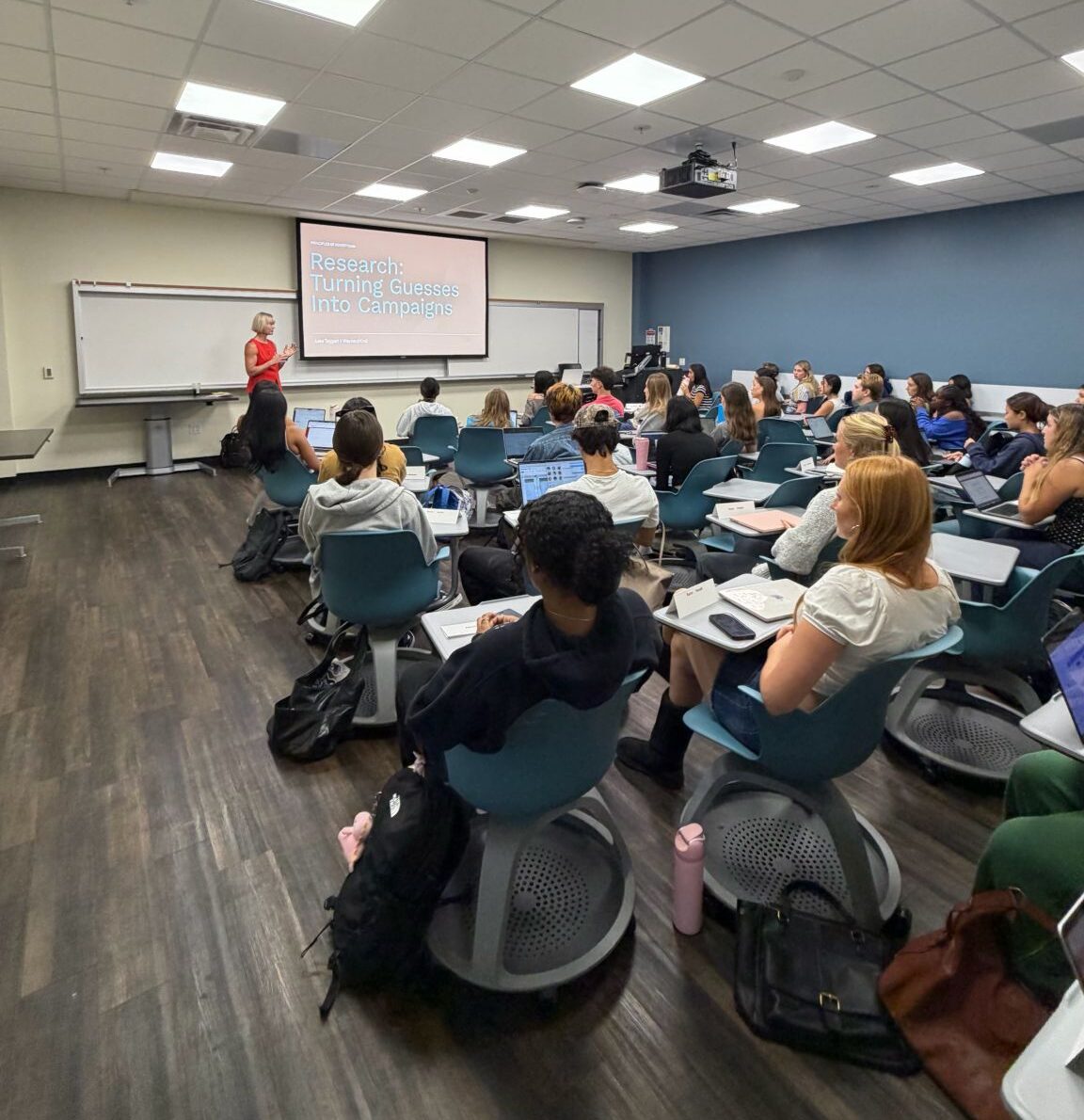
I shared this story recently with a room of advertising students at San Diego State University, where I gave a guest lecture on research. The students are just starting out, but the process I walked them through is the same one we use with clients every week. If your marketing has ever started with a hunch, this one is for you.
Guessing Gets Expensive
Creative work costs real money. When a campaign is built around an assumption, the first real test of that assumption arrives after the budget is spent, the ads have run, and the results are quiet.
Even the biggest brands learn this the hard way.
In 2022, Instagram tested a full-screen feed filled with recommended video from accounts people did not follow, a clear nod to TikTok. Users responded with a “Make Instagram Instagram again” petition that passed 200,000 signatures, with a boost from Kylie Jenner and Kim Kardashian. Within days, the head of Instagram announced a step back and the test was rolled back.
Instagram did go on to add more video over time, and that later decision was backed by usage data showing people were watching it. What we can learn from here is that guessing comes with a price, and in Instagram’s case, the price was paid in public. The company rolled out the change before confirming that users wanted it, then had to reverse course while the whole internet watched.
A few hours of research lets you find out how your audience feels before you spend anything. For teams building a marketing strategy on a small budget, that matters even more. It can shape the message, the audience, and the placement while changes are still cheap to make.
I tell students and clients the same thing: research gives creativity something to aim at.

Start With What Is Already Known
So, where do we start with the research? It usually starts with a search bar, a quiet hour, and what we call secondary research.
Secondary research is information someone else has already gathered, such as government data, published studies, industry reports, news coverage, and customer reviews. Chances are good that part of your question has been asked before, and the answer is sitting in public. Looking there first means we never spend someone’s time on a question a quick search could have answered. It also gives us sharper questions to bring when we do sit down with real people.
The tools are free, and they cover more ground than most people expect:
- Google Trends shows how search interest rises and falls over time, compares terms, and breaks results down by region.
- Census.gov and Data.gov offer demographics for nearly any place or group.
- Pew Research Center explains how different segments think, behave, and use media.
- SparkToro shows where an audience spends its time and attention online.
- Google Scholar supplies the academic “why” behind behavior.
- Nonprofit Explorer opens up the budgets, priorities, and leadership of any nonprofit through its public 990s.
With a new client, this is where we begin. By the time anyone picks up the phone, much of the competitive picture is already on the table, and the conversations that follow are better for it.
Listen for Their Exact Words
Every organization has a word for what it does, and the word changes once it leaves the building. A team calls it “co-occurring conditions,” while a worried parent types “am I depressed?” The team’s “intake assessment” is “who do I call first?” to the person holding the phone. In my own field, “strategic alignment” sounds like “why does our marketing feel scattered?” from a founder at the end of a long week.
Each version fits the person using it. The trouble starts when only one version makes it onto the website, the emails, and the ads. People decide within seconds whether a message is meant for them, and they stay when the words match how they already think about the problem.
Primary research, which means learning directly from the people we want to reach, is where we hear that language. In interviews, I ask about the customer’s world instead of the product, because “Who buys, and why?” tells me more than “What do you sell?” I write down the phrases people repeat, word for word, since they often become headlines, and I close by asking “What surprised you?” The best insights tend to hide in that answer.
A short survey can do similar work on a $0 budget. Google Forms is free, and five to seven questions is enough, with one screening question up top to confirm the right people are answering. Asking about behavior works better than asking about opinion, so “What did you do last time?” beats “What would you do?” Twenty-five to forty responses will not be statistically representative, but they point in a clear direction. When asking isn’t possible, the audience is often already talking in Reddit threads, YouTube comments, platform search bars, and three-star reviews.
Read the Field Before You Enter It
Once we know how an audience talks, the next question is who else is already talking to them. Competitive research answers it, and the goal is to find the space other brands have left open.
We read how competitors describe who they are for and which promise they lead with, then notice what they never mention. We also check where they spend their money, since a channel nobody is using is often an opportunity.
Ad libraries make this easier than most people expect. The Meta Ad Library shows every active ad on Facebook and Instagram from any page, and TikTok Creative Center, Google Ads Transparency Center, and the Ads tab on LinkedIn company pages do the same for their platforms. Two minutes with a competitor’s live ads can teach more than an hour of brainstorming.
Gymshark shows what this kind of attention can uncover. The company started in a garage in 2012 with no ad budget, up against Nike and Adidas. Its founders saw that their audience trusted the fitness YouTubers they watched every day more than TV spots or pro athletes, so they sent those creators free gear and had them post on the same drop day.
After the 2013 expo, daily sales climbed from about $450 to about $45,000, and the company grew into a $1 billion brand by 2020. Small teams can compete with giants the same way, by choosing where to show up.
From Findings to Insights
Gathering information is only half the work. The other half is deciding what it means, and this is where many teams stop too early.
This reminds me of Stanley’s Quencher. The cup launched in 2016 and was nearly discontinued by 2019, because Stanley believed its buyers were construction workers and outdoor enthusiasts. Then a women-run shopping blog noticed that its mostly female audience loved the cup, and a bulk order sold out fast.
Women were buying the cup, and that was the finding. Anyone could have seen it. The insight came from asking why, and the answer was that these buyers saw the Quencher as a lifestyle accessory worth collecting. Stanley built on that with seasonal colors, limited drops, and influencer seeding where those women already spent their time. Revenue grew from about $70 million in 2019 to about $750 million in 2023, and the product stayed the same.
A finding tells us what is happening, and an insight tells us why. To get there, I keep asking “so what?” and “why would anyone care?” until the answer sounds like something a real person would say. Once we reach it, the message and the placement tend to follow.
Wondering What Your Audience Is Saying?
At Wayward Kind, we work with purpose-driven small businesses and nonprofit organizations to learn how their audiences think and talk before any money goes into creative. Our research is practical, affordable, and sized to the capacity of the team behind it.
If your marketing rests on a few untested hunches, we would welcome the conversation.
Reach out and let’s talk about what your audience might be telling you.